
April is Occupational Therapy Month: OT Treatment Proven for Reduction of Swelling
Posted April 22, 2026
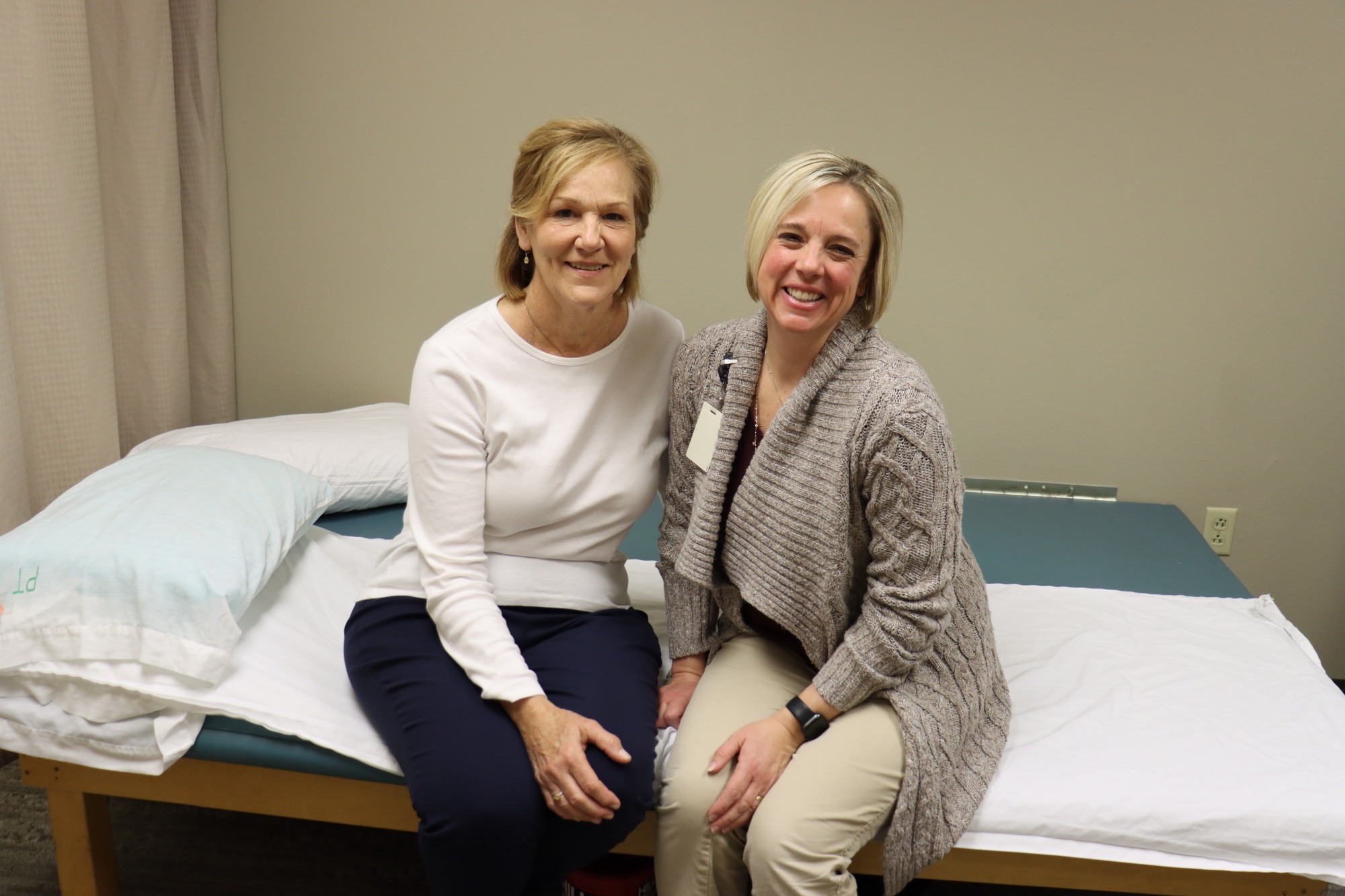
April is National Occupational Therapy Month. Pictured is Occupational Therapist, Tami Gebel, and Rose Abbott, at left, from rural Waukon. After having surgery 25 years ago, Rose has been provided valuable information during therapy sessions on methods to manage her lymphedema symptoms
Lymphedema is the chronic or persistent swelling of a body part due to an obstruction of the lymphatic system. The lymphatic system lies underneath the skin and works closely with the blood circulation system as it transports fluids throughout the body to lymph nodes. While in the lymph nodes, the fluid is “cleaned” of bacteria, viruses, and other unwanted materials called cellular debris. The “clean” fluid is then sent to the blood and re-circulated throughout the body.
Lymphedema occurs when the lymphatic system is damaged and unable to move the fluid, therefore the fluid collects in the body part and swelling develops. Damage to the lymphatic systems occurs when there is surgery, mastectomy, lymph node removal, radiation, or injury to skin tissue (such as a burn).
Lymphedema can cause problems such as decreased ability to move the body part, decreased strength, impaired sensation, difficulty walking, fatigue and overall inability to complete daily activities such as dressing, bathing, cooking, cleaning, and other work tasks. Early signs of lymphedema that patients should watch for are: increased swelling in the area around an incision or scar, lumps often felt under the skin, skin changes in color and feel (such as more reddish in color, thicker, or dryer skin when compared to opposite side of body), and the swollen arm or leg feels slightly warmer than the other.
Lymphedema can be treated by an occupational therapist. Some of the treatment techniques used are manual lymph drainage, which is a gentle skin massage; compression bandaging to assist the lymphatic system in keeping the excess fluid out of the area; and exercises. The occupational therapist also provides education on skin care, and other lymphedema precautions.
Lymphedema is a lifelong condition that needs to be managed daily in order to prevent the symptoms from worsening. Use of compression garments and a pneumatic compression pump device are available for patients to manage their symptoms on their own at home.
If you have any questions, or would like to begin treating your lymphedema, please contact the Occupational Therapy Department at Veterans Memorial Hospital at 568-5528.
More News
May 18, 2026
All Seniors Invited to Wellness Chat & Bingo at Waukon Robey Library-Hosted by Senior Life Solutions
May 15, 2026
Mason Kerian, Reflects on Her First Few Months of Medical Practice in Postville & Waukon Clinics, Back at Home
