
February Heart Month: The Seriousness of Chest Pain
Chest pain is a common presenting complaint in any emergency room, including the emergency room at Veterans Memorial Hospital. There is always the possibility of heart disease in every complaint of chest pain or upper abdominal pain and must be taken very seriously.
The common signs and symptoms of an acute myocardial infarction, commonly called a heart attack, are;
- Chest pain (crushing, squeezing or heaviness).
- Sudden onset of weakness, nausea, fainting and sweating without an obvious cause.
- Pain that radiates to the shoulders, neck or arms.
These symptoms occur when the blood flow to a part of the heart is blocked, often by a blood clot. This happens because coronary arteries that supply the heart with blood slowly become clogged from a buildup of cells, fat and cholesterol called plaque.
Blood that tries to flow through these clogged arteries can form a clot. If this clot cuts off the blood flow completely, the part of the heart muscle supplies by that artery begins to die.
Time is muscle! This is very important to remember in the case of a heart attack. If someone is experiencing the signs and symptoms of a heart attack, call 911 immediately. This will allow an ambulance with trained personnel to come assist that person to the hospital.
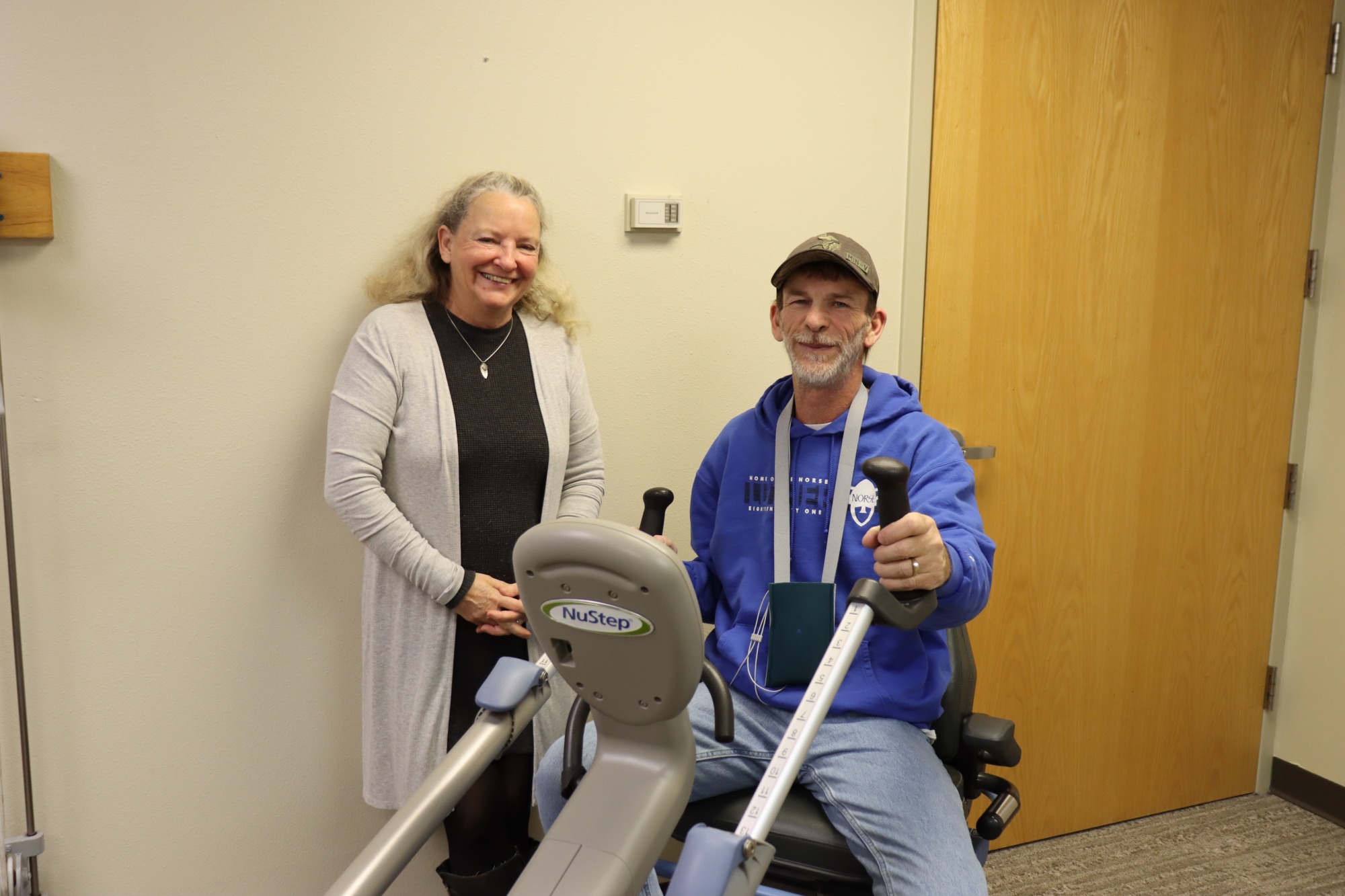
This was just proven true by Wally Rolfs of Lansing, whose life was saved by following his wife’s advice and calling an ambulance right away, instead of first driving home.
“I was at work over by Camp Douglas in Wisconsin and all of a sudden had some bad chest pain. I was going to drive home, but my wife talked me into getting to the doctor right away and thankfully I did,” explains Wally. “I had a helicopter ride to Madison where they got me into surgery quickly for an aortic heart dissection. I recovered for awhile in the hospital then began this 14 week Cardiac Rehab program at Veterans Memorial Hospital. Today is my graduation day and I have been released to go back to work. This is a great program and close to home. I feel like I have made a full recovery.”
Once at the hospital, a variety of treatments can be rendered. For example, at Veterans Memorial Hospital, each nurse on staff is trained in Advanced Cardiac Life Support (ACLS) and knows how to use the necessary equipment and specialized medicines used to reduce heart damage. The quicker this begins, the less heart muscle is damaged.
Veterans Memorial Hospital medical and nursing staff has the ability to give the medicines commonly referred to as the “clot busting drug.” The purpose of these drugs is to attack the clot cutting off the blood flow in the coronary artery. Once this clot is broken down, the blood returns to this area, decreasing the damage to the patient’s heart muscle. The quicker this is administered, the better.
Again, time is muscle. If you or someone you know ever experiences the signs and symptoms of a heart attack listed above, please do the right thing, like Wally Rolfs did, and call for help right away.
